Sea Freight Qatar
What is sea freight and why is it a preferred choice for businesses in Qatar?
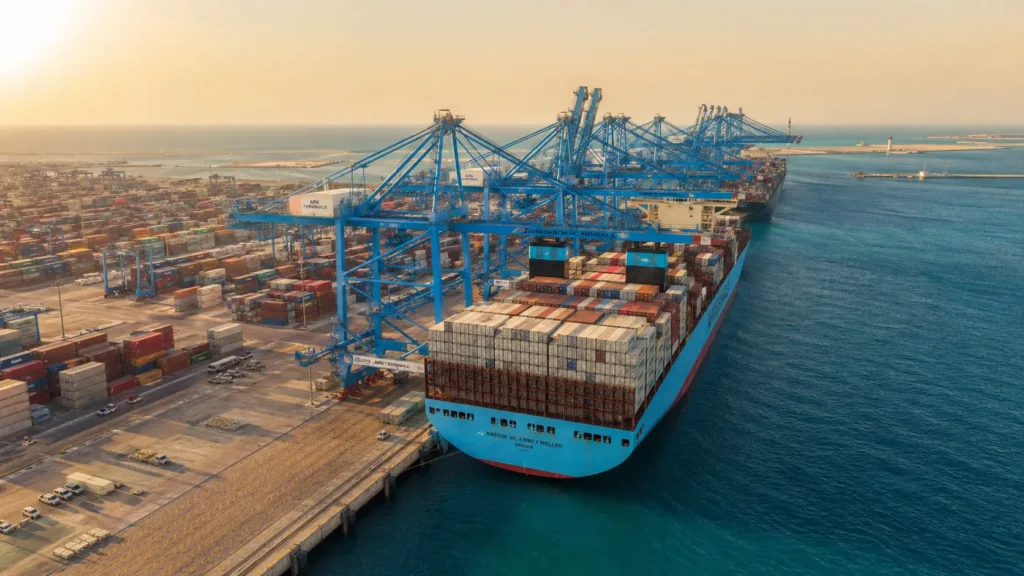
Sea freight — also referred to as ocean freight — is the movement of goods via cargo ships across international shipping lanes. It is the most widely used and cost-effective mode of transport for large-volume, heavy, or non-urgent cargo. Qatar’s Hamad Port is one of the most advanced deepwater container terminals in the Middle East, processing millions of TEUs annually and connecting Doha to major trade routes across Asia, Europe, Africa, and the Americas.
For businesses in Qatar importing or exporting significant cargo volumes, ocean freight offers unbeatable cost efficiency, particularly when transit time is not the primary constraint.
What types of ocean freight services does Alfaline offer from Qatar?
Alfaline provides two primary sea freight options from Doha, catering to different cargo volumes and budgets:
- FCL (Full Container Load): Your cargo exclusively fills one or more standard shipping containers (20ft or 40ft). Ideal for large shipments that can fully utilise container space — providing direct, fast, and secure ocean transit.
- LCL (Less than Container Load): Your cargo shares container space with other compatible shipments. A cost-effective option for smaller volumes that don’t justify the cost of a dedicated container. Alfaline consolidates LCL cargo and coordinates departure schedules accordingly.
Additional specialist services include: refrigerated (reefer) container shipping for temperature-sensitive goods, open-top containers for oversized cargo, flat-rack containers for heavy machinery, and out-of-gauge (OOG) cargo handling.
Which global trade lanes does Alfaline serve from Doha?
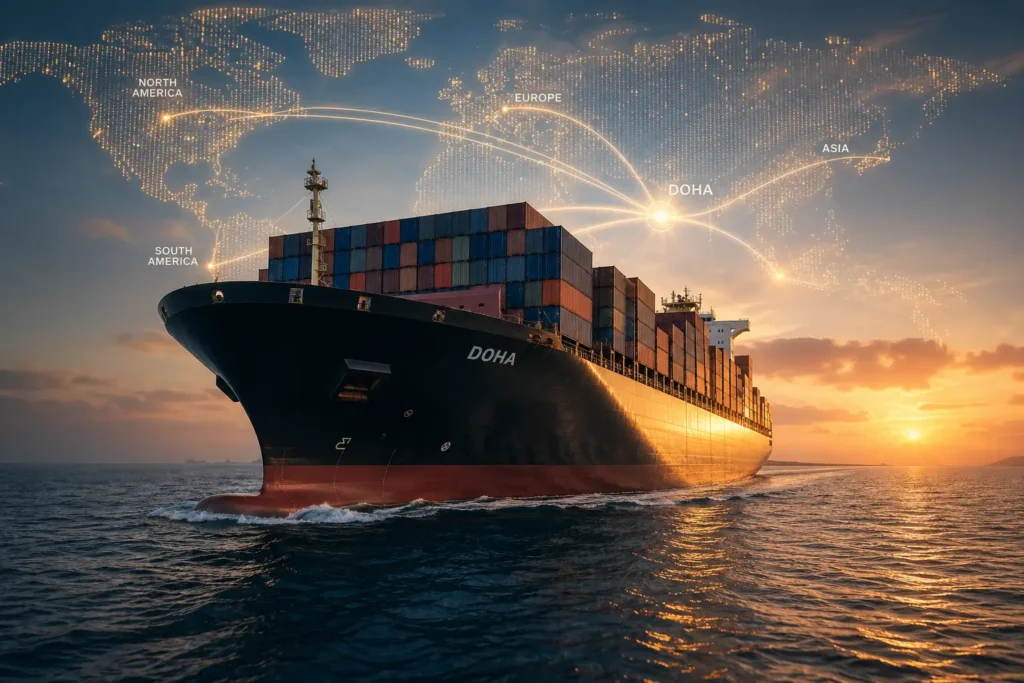
Through our established network of shipping line partnerships and port agents, Alfaline connects Qatar to key international trade lanes, including:
- Intra-GCC: Direct sea connections to UAE, Oman, Saudi Arabia, Kuwait, and Bahrain
- Asia: India, China, Southeast Asia, Japan, and South Korea
- Europe: UK, Germany, Netherlands (Rotterdam), Italy, and Spain
- Africa: East and West Africa trade corridors
- Americas: North America and South America via major transhipment hubs
What documents are needed for sea freight from Qatar?
Ocean freight requires a specific set of documents to ensure smooth port handling and customs clearance. Standard requirements include: a commercial invoice, packing list, bill of lading (B/L), certificate of origin, shipping instructions, export customs declaration, and — where required — additional permits for restricted goods. Alfaline manages the complete documentation process, working with port authorities and shipping lines on your behalf.
How are sea freight rates calculated?
Sea freight rates are influenced by several factors: the type of container (20ft, 40ft, reefer, special), the origin and destination ports, current shipping line rates, fuel surcharges (BAF), port handling charges, documentation fees, and any additional services required (inland transport, customs clearance, cargo insurance). Alfaline provides clear, all-inclusive quotes tailored to your specific shipment so you can plan your costs with confidence.
What are the transit times for sea freight from Doha, Qatar?
Typical transit times from Hamad Port:
- Intra-GCC ports: 3–7 days
- India: 7–12 days
- China and Southeast Asia: 18–28 days
- Europe: 20–30 days
- Americas: 28–40 days
These are approximate sailing times and may vary based on shipping line schedules, port congestion, and any transhipment requirements.
Does Alfaline handle sea freight customs clearance in Qatar?
Yes. Our licensed customs clearance team manages all export and import formalities at Hamad Port — including documentation submission, duty assessment, cargo inspection coordination, and final release. We ensure your sea freight clears customs accurately and efficiently, avoiding unnecessary port storage charges and delays.
Frequently Asked Questions
Everything you need to know about our sea freight solutions