Chemical Permit Vehicle Services
What are chemical permit vehicle services and why are they necessary?
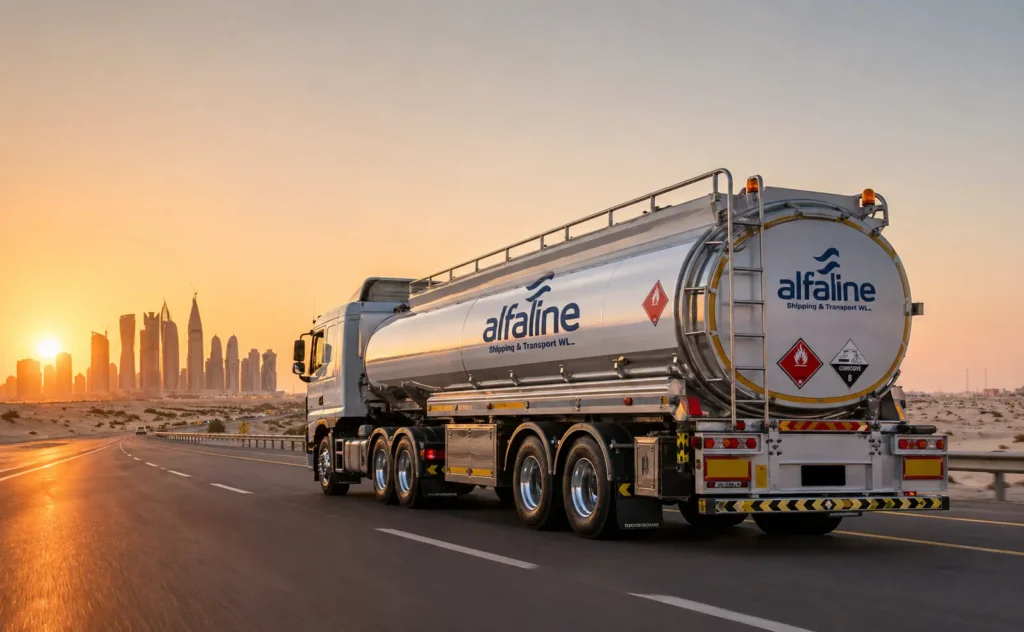
Chemical permit vehicle services refer to the use of specially licensed vehicles — approved by the relevant transport and regulatory authorities — for the road transport of hazardous, chemical, or dangerous goods across Qatar and GCC countries. Not every vehicle is authorised to carry such cargo. Specific permits, vehicle specifications, driver certifications, and documentation are required by law to transport chemicals, flammable liquids, corrosive materials, and other hazardous substances on public roads and across international borders.
Attempting to transport chemical or hazardous cargo without the correct permits is a serious regulatory violation in all GCC countries, with potential consequences including cargo confiscation, heavy fines, and criminal liability.
What types of cargo does Alfaline transport using chemical permit vehicles?
Alfaline’s chemical permit fleet is equipped and certified to transport a range of hazardous and specialist cargo, including:
- Industrial chemicals and solvents
- Flammable liquids and combustible materials
- Corrosive substances
- Petroleum-based products and lubricants
- Cleaning agents and detergents classified as hazardous
- Paints, coatings, and adhesives with hazardous classifications
- Agricultural chemicals and pesticides
- Other materials classified under the GHS (Globally Harmonised System) or UN hazardous goods classifications
What makes Alfaline qualified to transport chemical cargo across the GCC?
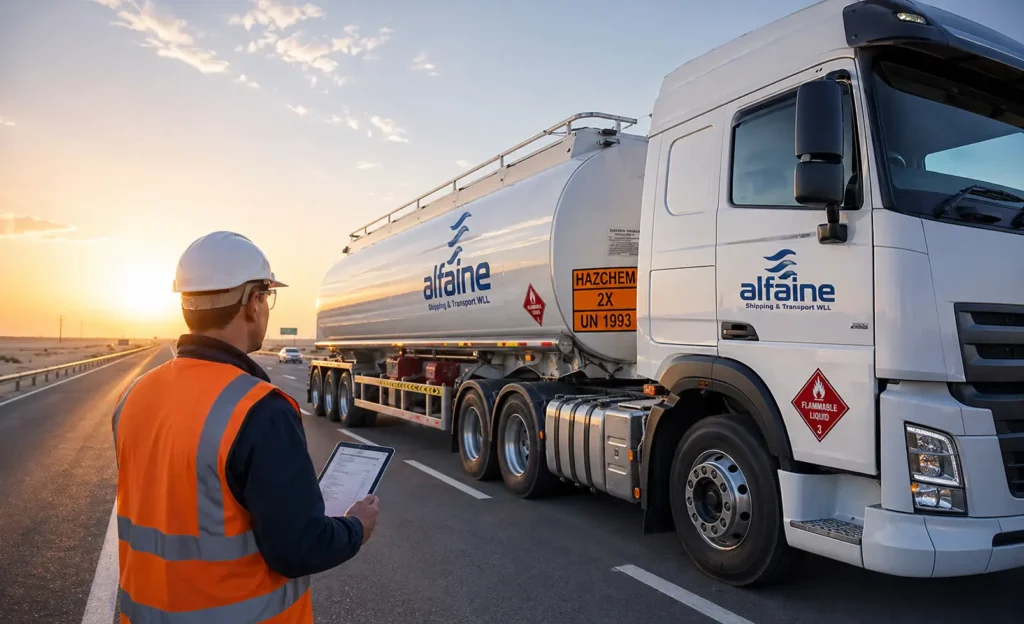
Alfaline holds the required chemical transport permits issued by the relevant Qatar authorities and operates vehicles that meet GCC regulatory standards for hazardous goods transport. Our drivers are specifically trained in HAZCHEM procedures, emergency response protocols, and cross-border chemical cargo documentation requirements. Our operations team verifies the correct classification of every chemical shipment before dispatch and ensures all documentation — including material safety data sheets (MSDS), UN numbers, and packing group classifications — is accurate and compliant.
What documents are required for chemical cargo transport across GCC borders?
Chemical and hazardous goods shipments require a more extensive documentation set than standard cargo. Required documents typically include: a Material Safety Data Sheet (MSDS) for each chemical, UN classification and packing group details, a chemical cargo manifest, hazardous goods declaration, the relevant transport permit issued by the Qatar or UAE authority, a certificate of origin, commercial invoice, and destination country-specific import permits or approvals where required.
Alfaline’s team prepares and verifies all documentation before the vehicle departs, ensuring full compliance at every border crossing.
Which GCC countries does Alfaline serve with chemical permit vehicle services?
We operate chemical permit vehicle services across the following GCC cross-border routes:
- Qatar to Saudi Arabia (KSA) via Abu Samra
- Qatar to Oman via established route corridors
- UAE (Dubai) to Qatar — coordinated through Alfaroute Shipping and Transport LLC
- Other GCC destinations on request, subject to destination country permit requirements
How does Alfaline ensure the safety of chemical cargo in transit?
Safety is the first and highest priority for every chemical freight movement we manage. Our processes include: thorough pre-departure vehicle inspection, correct cargo segregation and securing within the vehicle, proper hazard placarding on all vehicle panels, driver briefing on the specific cargo being carried and emergency response procedures, and continuous operational monitoring during transit. In the event of any incident or delay, our operations team follows established emergency protocols and coordinates with the relevant authorities immediately.
Frequently Asked Questions
Everything you need to know about our land freight solutions